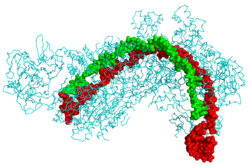
 Each sequence within an individual prokaryotic CRISPR is derived from a DNA fragment of a bacteriophage that had previously infected the prokaryote or one of its ancestors. [4][5] These sequences are used to detect and destroy DNA from similar bacteriophages during subsequent infections.
 CRISPR, short palindromic repeating sequences of DNA, found in most bacterial genomes, that are interrupted by so-called spacer elements, or spacers—sequences of genetic code derived from the genomes of previously encountered bacterial pathogens.